Tuesday, August 27, 2024

Killer Whales and Their Prey in Iceland

This expedition is my 9th with Earthwatch and is Bryan’s 3rd. It is, however, our first one together! 12 days on the island of Vestmannaeyjar, to study and protect killer whales.

We joined two other couples for the expedition: Marty Goldenberg & Christine Somers from N. Carolina/New York, and Stuart Saslow & Jesse Hutt from Colorado.


The house they rented for us had three bedrooms upstairs, so it worked out perfectly: each couple got their own room, with one bathroom between us all. Downstairs, we shared the kitchen/dining/living space – each taking turns cooking dinners and fending for ourselves for breakfast.


Dr. Filipa Samarra was our Lead Investigator on the project; she had 5 students working for her as well as 2 boat captains. All of them were perfectly wonderful people, and each one went out of their way to make us all feel welcomed and valued.


Filipa - Lead Investigator from Portugal

AYÇA (pronounced Eye-Sha) - Project Coordinator from Turkey

EILIDH (rhymes with Haley but without the H) - Project Photographer from Scottland

Joe - Student Scientist from London

Lena - Student Scientist from Germany

Lucy - Student Scientist from London

Aly - Boat Captain from Pennsylvania

Magnus - Boat Captain from Germany/Portugal

Our first day “on the job” was spent learning what the job is and how to do it. We got presentations by numerous students, learning all about Killer Whales and the surrounding area. The office where they do their work is very modern, with offices, labs, a kitchen/break room, and easy access to the boat harbor right across the street.


We basically had three jobs:

Photo ID = each time they go out on the boat, the photographer takes as many pictures as possible, trying to get good photos. We then took the photos and compared them to the database, one at a time, trying to make an identification.


BOAT WORK = if weather conditions allow, you go out on the boat and look for whales. Once a pod is located, you try to get good photos for ID purposes, take biological samples if needed, attach telemetry tags if available, observe behavioral patterns, and record vocalizations.


LAND WORK = when not doing either of the two jobs above, we were out at the far end of the island observing all species of whales using high-magnification binoculars. We recorded the positions and behavior of any whales observed and helped record data on environmental factors. We were also in contact with the boat crew (if they were out that day) to inform them of the whale’s location.


Our house was only about a mile and a half from the office, if we had office work that day, we would walk to work (unless it was too stormy, then they would come get us in the car). Vestmannaeyjar is a cute little town, and we got to know it fairly quickly. They even had a public pool so Bryan could soak in the hot water each evening.


All in all, we had a great time. I would highly recommend this expedition to all of you!

ICELAND = 5 Days / 4 Nights

DAY ONE – We walked around town a bit and saw some sights. Ate a quick dinner then hit the sack. The hotel (Hótel Klettur) was nice enough, but our room was quite small.

The Sun Voyager by Jón Gunnar in 1990


Hallgrímssafnuður belongs to the Evangelical-Lutheran national church and about 7000 people live in the church's parish area. 


DAY TWOour hotel this time (Hótel Kverna) was an old boarding school that had been remodeled into a hostel. Two floors each with 16 rooms and only one bathroom per floor. Still, the common area provided us a place to write in our journals and plan out our day.

Þingvellir nationalpark was established 1930. Today it is one of the most visited sites in Iceland. Þingvellir was accepted as a UNESCO World Heritage site 2004 for its cultural value to the world.

Strokkur (The Churn), which erupts at regular intervals every 10 minutes or so, reaching as high as 30 meters.

The Skógafosswaterfall is one of the largest in Iceland with a drop of almost 200 feet.


DAY THREE – our next hotel (Hótel Skógafoss) was just down the street from our last one, but at least this time we had our own bathroom!

Dverghamrar (Dwarf Rocks) is a peculiar and beautiful columnar basalt formation.


The FjaðrárgljúfurCanyon Hike is short and easy and follows the canyon for about a mile before turning back around. This slightly off-the-beaten-path stop has several viewing platforms to snap some photos.


Skaftárstofa is the Vatnajökull National Park visitors center, located near Kirkjubæjarklaustur at Sönghóll by road number 1. It also serves as an information center for the municipality of Skaftárhreppur.

The idea behind the extraordinary Lava Show is to recreate a volcanic eruption by superheating real lava up to a molten state of 1100°C (2000°F) and then pour it into a showroom full of people.

DAY FOUR – we ended our trip back at the same hotel we started at (Hótel Klettur), but this time they put us on the 8th floor with a bigger room.

Vik í Myrdal, or just Vik, is the southernmost village on the Icelandic mainland, with a population of around 650 residents.


Reynisfjara is a world-famous black-sand beach found on the South Coast of Iceland, just beside Vik í Myrdal.

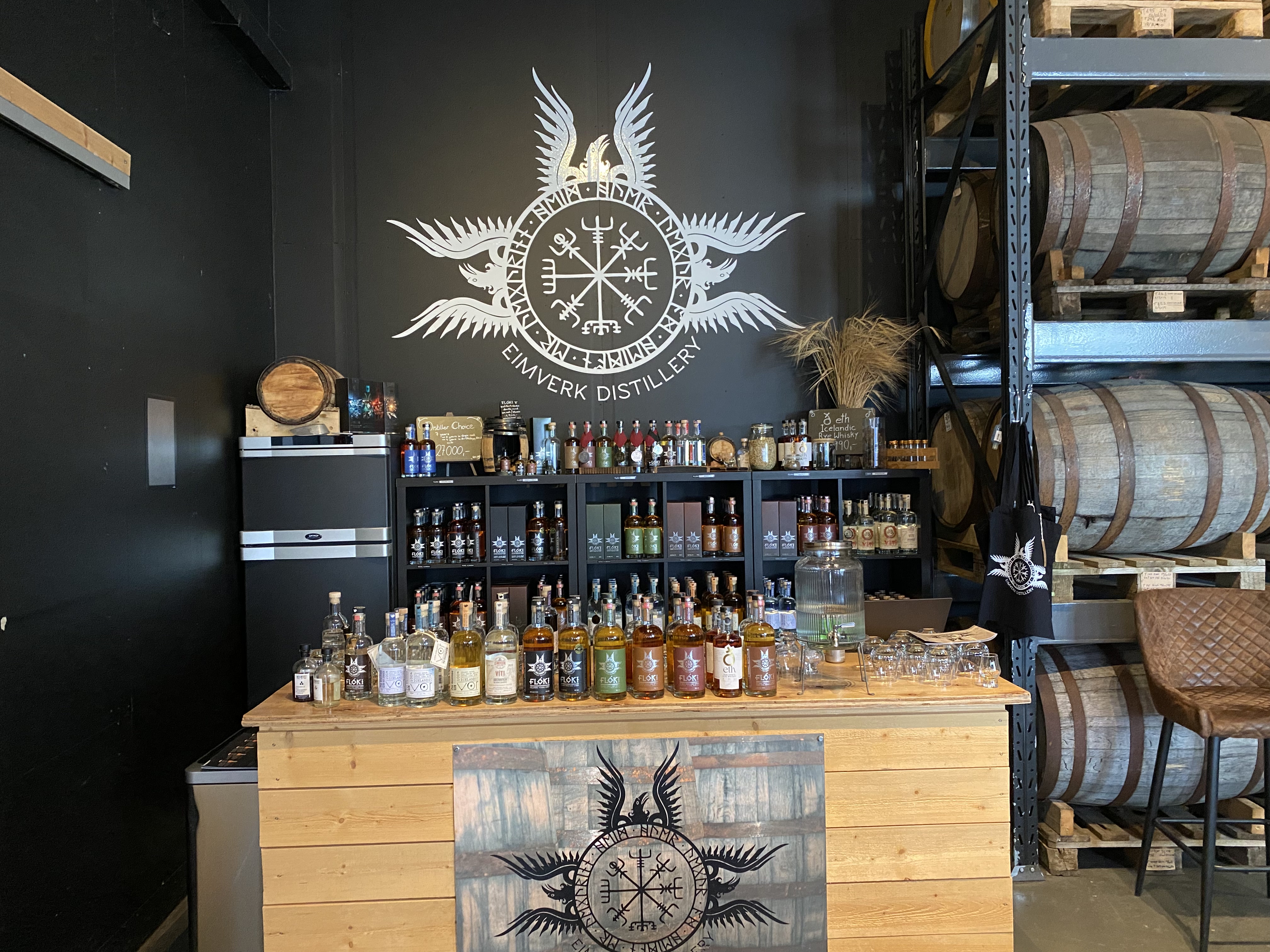
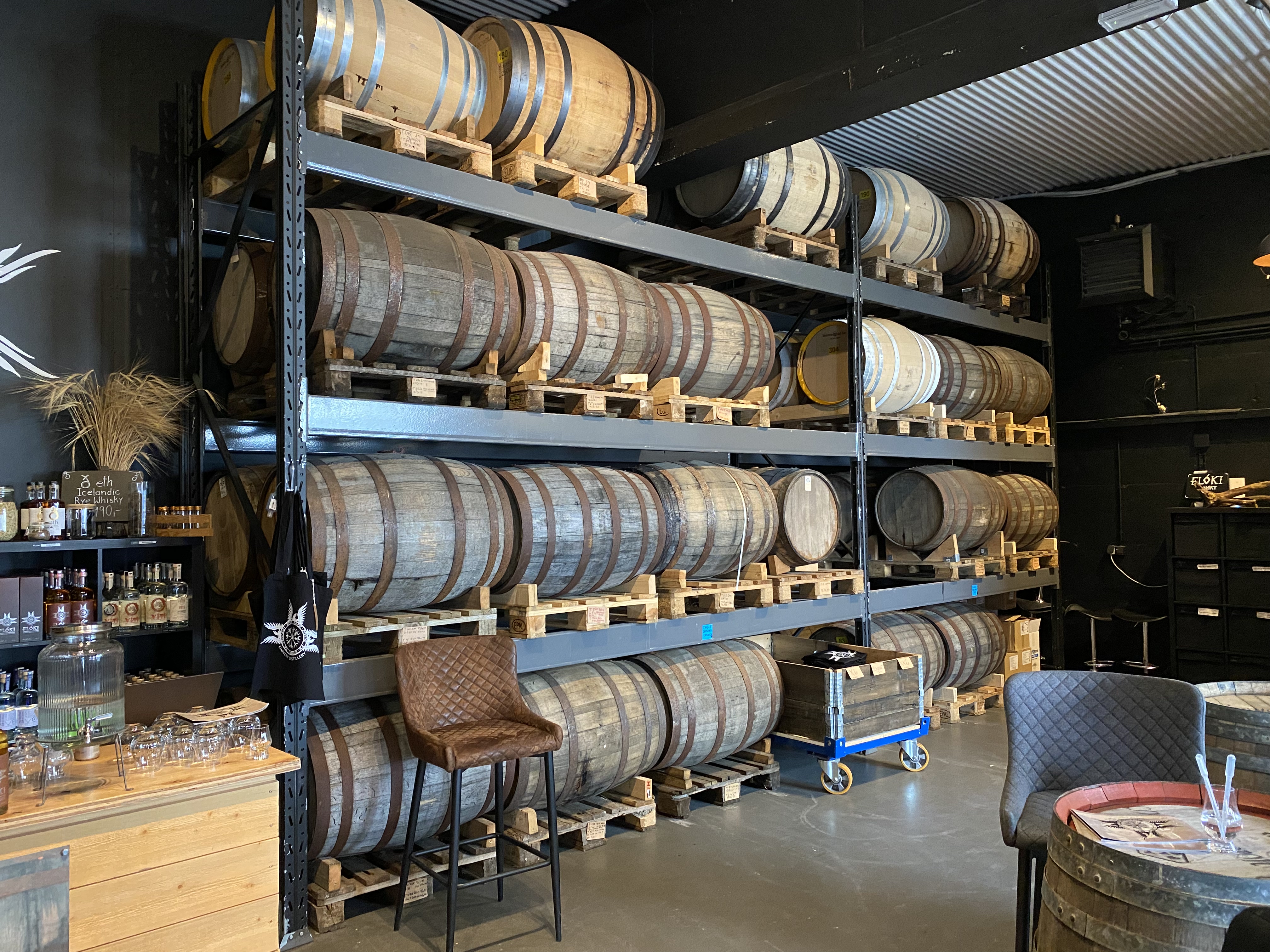
Eimverk is a family operated distillery founded in 2009 with the mission to make premium Icelandic liquors strictly from local ingredients. They produce three spirits: Flóki, a single malt whisky; Vor, a pot distilled gin; and Víti, their signature version of Icelandic Brennivín.


DAY FIVEour last day gave us just enough time to check out the lighthouse before we had to be at the ferry terminal to begin our second half of the trip.

The first lighthousein Iceland was built on Valahnúkur in Reykjanes in the year 1878. By 1905 earthquakes and surf had damaged Valahnúkur so much that there was the risk of the lighthouse falling into the sea. A new lighthouse was therefore built in 1907-1908 on Bæjarfell hill in Reykjanes and the old one was demolished with an explosion on April 16th, 1908.  The light-signal height is 69 meters above sea-level, but the actual height of the lighthouse is 26 meters.


Sunday, June 30, 2024

James Lake Cabin

There are three types of fun:

        Type 1 Fun: it’s fun while it’s happening, and it’s fun to tell the story afterwards.

        Type 2 Fun: isn’t so fun while it’s happening, but it’s fun to tell the story afterwards.

        Type 3 Fun: just plain isn’t fun. It’s no fun while it’s happening, and we do not want to relive it afterwards by telling the story.

Our hiking trip a few weeks ago started out as a Type 1 Fun trip, but sadly progressed into the Type 2 Fun territory rather quickly – even at one point looking dangerously like Type 3 Fun.

We did the Canoe Trail out in the Nancy Lake Recreation Area: 3 days of hiking/paddling, starting at Tanaina Lake and ending at the Public Use Cabin on James Lake. I don’t have an exact mileage, but it was a good 3-4 hours to get from point A to point F – paddling the lakes and hauling all our gear AND the canoe across portages in between. 

Tanaina Lake was fairly large, and the portage was on the far side – so we got to enjoy the water for a good half hour at least. Bryan put a line in the water trailing behind us, just in case a pike happened by and got hungry. There were a few others on the lake with us, but not too crowded. The portage over to Milo’s Pond was the longest in length but we were still quite fresh and not yet worn out. The mosquitoes were HORRIBLE! I really HATE mosquitoes, and there were millions of them. And since we’re hauling all our gear, I didn’t have hands free to keep them off of my face.


Milo’s Pond is a tiny little thing. It took longer to get our gear there than it did to paddle across to the next portage. The weather could not have been nicer though, with clear blue skies and a light breeze now and then. I had on my fluorescent orange sun shirt and a wide-brimmed hat to keep from burning. The portage over to the next lake was just a short hop. I was actually able to make two trips, so didn’t load myself down on the first hop.


Little No Luck Lake was a small lake as well, although quite a bit bigger than the pond we’d just traversed. Again, Bryan had his line in the water trailing behind us, hoping for a pike or two – but no luck (pun intended). Thankfully the bugs were not out in the middle of the lake, so we had some respite from their incessant biting. Our next portage was again just a short hop up and over a tiny hill. This time, however, I managed to trip and fall – which is no fun when you’re carrying a 25 pound pack AND have your arms loaded  up with yet more gear. I landed with my head bouncing off a rock – so did not enjoy that at all. It took a while to breath that one off, let me tell you!


The next lake was Big No Luck Lake, and as it’s name implies was much bigger than the last two or three lakes. This gave us a bit of a longer break, both from the mosquitoes and from hauling gear. Bryan made me eat an energy bar to help my body cope with the bonk on the head, and I have to admit he was right. He also would not let me carry anything more than the paddles and our water bottles, so the portage to the next lake wasn’t quite so bad. The mosquitoes were worse, if that’s even possible, and the trails were quite overgrown with Devil’s club.


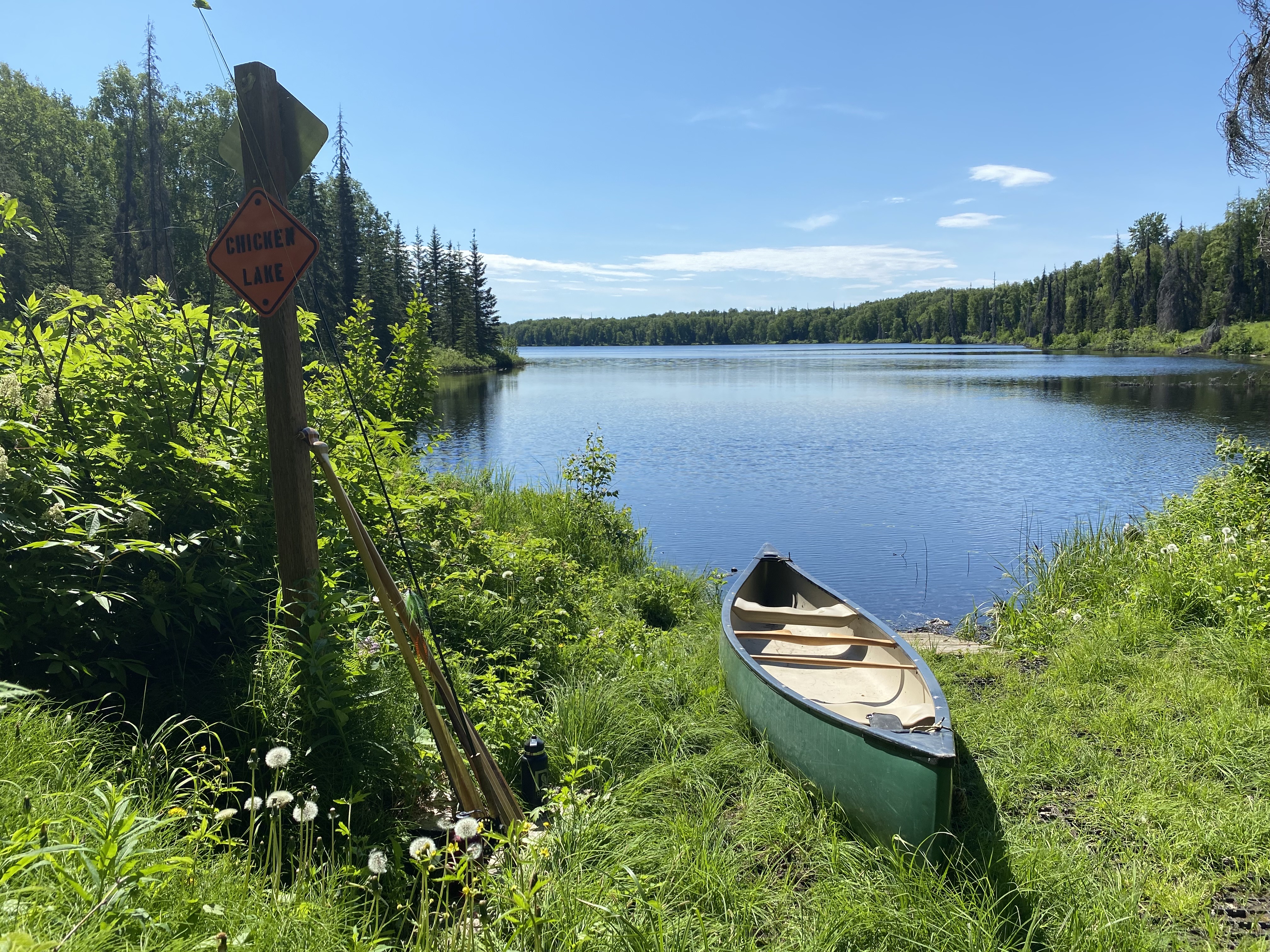
Chicken Lake was quite beautiful but the portage to the following lake was just around the corner (sorta) so we weren’t on it very long. The last portage of our trip was another long one, and I have to say was brutal. We had to deal with the heat, the mosquitoes, a rather steep incline and then the steep decline as well, AND we had to make several trips to haul all the gear & canoe across. Well, I should say HE had to make several trips – I was not doing well at all and could barely make just one trip. I was seriously wondering what the hell I was doing and just who’s idea was this whole trip anyway.


We finally made it to James Lake, though, and got to relax in the boat for a while before making it across to the cabin. Unfortunately, the trail leading up to the cabin is quite steep but at least this time half our gear stayed at the bottom with the canoe.  


The cabin itself is a nice one, with bunk beds (just wooden platforms to lay out your sleeping pads & bags on), a table, a cooking area, and a wood stove. The windows had screens so we could open them during the heat of the day, and the picnic table outside provided a nice spot to sit and recover form the trip while looking out over the fantastic view of the lake. It could definitely use some TLC, however, as the steps leading up to the cabin were in sad shape.


After a quick dinner, we both just crashed – him on the bottom bunk and me up on the top.

The next morning, after a quick bowl of oatmeal, Bryan headed off to fish for some pike while I got my letter writing out and got caught up on my correspondence. I read my book. I drank some tea. I napped. I played some cards. Basically, I just relaxed. The fishing was apparently successful – he told me he caught about 10 pike. He threw most of them back in the water but kept the biggest one to cook up for our dinner that night. It was VERY tasty!


The journey back to our truck in the Tanaina Lake Parking Lot was not nearly as dreadful as I feared it would be. The mosquitoes were still horrendous, and the trails were still overgrown with Devil’s Club – but we managed. We even got a surprise visit at Milo’s Pond = a yearling moose came to check us out. He was very interested in my fluorescent orange shirt and just could not figure out what that was.